Showing posts with label rabies. Show all posts

Tuesday, April 5, 2016

Star Wars Midi-chlorians On Earth?

Star Wars Episode VII: The Force Awakens was a HUGE success and is being released on Blu-ray and DVD today. Fans seems to be in agreement that J.J. Abrams did a better job reviving the franchise than George Lucas did with the Star Wars prequels, which caused a great disturbance in the Force.


While Jar Jar Binks soured the prequels for most people, one of the other sticking points was the Midi-chlorians. The what? Let's review. In the original series, the Force was described by Obi-Wan Kenobi as "an energy field created by all living things. It surrounds us, penetrates us, and binds the galaxy together." In episode I, Qui-Gon Jinn delivered the buzzkill message that the mysterious Force actually had a biological explanation. Instead of saying, “The Force is strong with this one”, one may as well say, “The Midi-chlorians are numerous in this one.”


Watching the interview below, Abrams appeared to show disdain for the whole "Midi-chlorian" idea, not even mentioning them in the new film.


According to Wookieepedia, “Midi-chlorians were intelligent microscopic life forms that lived symbiotically inside the cells of all living things. When present in sufficient numbers, they could allow their host to detect the pervasive energy field known as the Force.” A collective groan could be felt through movie theatres worldwide, as if millions of voices suddenly cried out in terror…

To a cell biologist, it sounds like Lucas drew his inspiration from the mitochondria, which are bacteria-like symbionts that work with our cells to provide energy. They even look like they might be cousins (see below). But that is where the similarities end. Unlike Midi-chlorians, mitochondria do not allow us to tap into energy fields…no matter how much we try to quiet our minds to hear our mitochondria speak to us.

Midi-chlorian (left) and mitochondria (right). Brothers from another mother?
 
But a strange and provocative paper by Alexander Panchin and colleagues proposes an unorthodox new idea called the “biomeme hypothesis”, which posits that the impulse behind some religious rituals could be driven by mind-altering parasites.

Let that sink in for a moment. Might your religion, or any number of other activities, be driven in part by parasites or symbionts in your brain? Before you dismiss the idea too quickly, think about the rabies virus. This super tiny virus is notorious for altering the behavior of dogs (and other animals, including people). Rabies can make even the most docile of dogs become uncharacteristically aggressive so that they bite and spread the virus. Rabies virus is just the tip of the iceberg; there is no shortage of parasites that are known to eerily alter their host’s behavior.

Rabies makes dogs aggressive to enhance viral transmission. The virus can get into a new host by causing its current host to bite others.
Central to Panchin’s hypothesis is the idea that certain religious rituals may facilitate the transmission and spread of parasites. The authors site that holy springs and holy water are replete with numerous microbes, including human pathogens. Sacred in Hinduism, the Ganges River probably contains the most, as an estimated 200 million liters of untreated human sewage is dumped into it every day. Bathing in this “purifying” water has led to the development of multiple diseases, such as cholera.  The Hindu “side-roll” ritual is associated with Cutaneous Larva Migrans, also known as “creeping eruption of the skin”, which is caused when the skin becomes infected with parasitic hookworm larvae. Performed in Muslim communities, ritual ablution, which involves irrigation of the sinuses, has been proposed to be a potential risk factor in contracting Naegleria fowleri (the infamous “brain-eating amoeba”) in Muslim communities. Outbreaks of respiratory infectious diseases and meningococcal disease are common amongst Hajj congregation in Mecca. The transmission of herpes has been reported in the Jewish circumcision method known as metzitzah, which involves the sucking of blood from the wound. Finally, many sacred relics are kissed or handled by many worshipers, offering additional routes for the potential transmission of multiple infectious agents.

While it is clearly demonstrable that certain religious rituals have inherent health risks, there currently is no direct evidence that any of the possible infections transmitted can influence the victim’s behavior (other than causing them to see a doctor). Until new data arrives, we are left with the conclusion that the rituals people engage in stem from cultural memes rather than biological. But one thing is clear:  you should use some hand sanitizer next time you dip your fingers in the holy water.

Contributed by:  Bill Sullivan
Follow Bill on Twitter
 
 
Panchin AY, Tuzhikov AI, & Panchin YV (2014). Midichlorians--the biomeme hypothesis: is there a microbial component to religious rituals? Biology direct, 9 (1) PMID: 24990702

Thursday, October 29, 2015

The Monster Mash – Diseases That May Have Spawned Monster Legends

We’ve all been there. Sick with the flu, we stagger around the house in a feverish state. With our baked minds marinating in a cauldron of cytokines, we can hardly formulate a complete sentence. Droopy-eyed and disheveled, we nearly scare ourselves to death when gazing at the reflection of our barely recognizable self. Terrified out of her diaper, your toddler may even run away from you with a frightful scream. As you’ll learn from the list below, there are several diseases that produce symptoms that mimic characteristics associated with legendary monsters.

Vampires

These blood-sucking creatures of the night are believed to have been inspired by the Romanian Prince Vlad, born in Transylvania in 1431. His father was named Dracul, and Dracula means “son of Dracul”. Dracula was a “defender of the Christian faith” who, ironically, gained notoriety by impaling his victims and dipping his bread in their blood before consuming it.
 
Prince Vlad before dinner (left) and after dinner (right).
 
However, the symptoms of porphyria (yes…it is pronounced poor-FEAR-e-uh!) are likely to have contributed to several aspects of vampire lore. While it sounds like a lost Def Leppard album, porphyria is actually a blood disorder that arises when patients cannot make and regulate heme properly (heme is a critical part of hemoglobin in the blood).

Porphyria can cause excessive nail growth and receding gums, the latter of which may make the canine teeth look more like fangs. Moreover, porphyria can cause skin to bubble and blister just minutes following exposure to sunlight. Look no further than 1985’s cult classic, Fright Night, to witness the awesome power of sunlight destroying a vampire.
 
 
Finally, to make up for the compromised hemoglobin production, the treatment for porphyria involves injecting patients with blood. Despite this parallel with vampirism, people with the disease do not “thirst for blood” or bite others.

Pluto from The Hills Have Eyes

Michael Berryman, best known for his portrayal of Pluto in the 1977 cult classic, The Hills Have Eyes, has an unforgettable appearance. While his role as a deranged desert cannibal haunted the dreams of millions, his character did not require hours in the make-up chair. Rather, his appearance is attributable to a rare genetic condition known as hypohidrotic ectodermal dysplasia. People with this syndrome have fewer sweat glands, sparse body hair, and missing or abnormal teeth. In addition, facial features of these individuals tend to be consistent with those seen in Berryman’s photo below. Other than heat intolerance due to a reduced ability to sweat, people with hypohidrotic ectodermal dysplasia are otherwise healthy.
 
Instantly recognizable on screen, Berryman has appeared in dozens of subsequent roles, including multiple appearances in Star Trek episodes and films.

Werewolves

On the opposite end of the spectrum, people with excessive hair, especially when it appears on the face, have long been attractions at circus sideshows. Perhaps the most famous is Julia Pastrana, also known as “the bearded lady” or “ape woman”, who caught the attention of many onlookers during her travels with “the freak show” in the 1800s. There is a name for this condition, which often resembles the classic appearance of a werewolf:  congenital hypertrichosis lanuginosa, or CHL. Babies born with CHL are usually covered in hair right out of the womb. Today, people afflicted with CHL can elect to have that hair removed with lasers.


“Don’t worry, it’s just a little hypertrichosis flare-up!”


Demonic Possession

Schizophrenia or multiple personality disorders are often cited as likely explanations for people exhibiting unusual behaviors. But an autoimmune disease called “anti-NMDA receptor encephalitis” has been recently described that also produces striking symptoms of demonic possession. A first-hand account of this ailment was written by Susannah Cahalan called, Brain on Fire: My Month of Madness.

 
Incidentally, anti-NMDA receptor encephalitis does not induce the green projectile vomiting made famous in The Exorcist. You have to go to Taco-Bell for that.

Zombies

There are a number of conditions that give people a zombie persona, such as that window of time from waking up till you get some coffee in you. While there is no disease that allows you to persist as an undead, brain-hungry zombie, there is a famous one that can drive animals to bite others:  rabies. Rabies is caused by a virus, and, thanks to Stephen King’s Cujo, most of us are familiar with how rabies can transform a puppy into a hellhound. The virus is plentiful in the salvia of infected animals and is transmitted through a bite or scratch. Many pathogens change the behavior of their host in order to spread. The rabies virus infects the brain in such a way that its host organism becomes overly aggressive, increasing the odds that the virus will be transmitted to a new victim through a bite.

Another type of disorder can lead to an eerie change in behavior with shades of zombification. A rare mental illness called Cotard delusion, or walking corpse syndrome, occurs when the afflicted no longer believe they are alive. First described in 1880 by neurologist Jules Cotard, this “delirium of negation” can run from mild self-loathing to severe depression. In the most extreme cases, the afflicted will deny the existence of certain body parts or their entire body. Consequently, they will stop taking care of themselves, even to the point of starving to death.

 
Marilyn Manson or ‘Cotard delusion’ support group?
 
For some interesting examples of zombification in wildlife, be sure to read Mark’s recent post, “Zombies And The Loss Of Free Will”.


Contributed by:  Bill Sullivan
Follow Bill on Twitter: @wjsullivan

 
Schulenburg-Brand D, Katugampola R, Anstey AV, & Badminton MN (2014). The cutaneous porphyrias. Dermatologic clinics, 32 (3) PMID: 24891059

Deshmukh S, & Prashanth S (2012). Ectodermal dysplasia: a genetic review. International journal of clinical pediatric dentistry, 5 (3), 197-202 PMID: 25206167

Kaur S, Juneja M, Mishra D, & Jain S (2014). Anti-N-methyl-D-aspartate receptor encephalitis: A case report and review of the literature. Journal of pediatric neurosciences, 9 (2), 145-7 PMID: 25250071

Ramirez-Bermudez J, Aguilar-Venegas LC, Crail-Melendez D, Espinola-Nadurille M, Nente F, & Mendez MF (2010). Cotard syndrome in neurological and psychiatric patients. The Journal of neuropsychiatry and clinical neurosciences, 22 (4), 409-16 PMID: 21037126

Tuesday, June 2, 2015

8 Cuddly Creatures and the Dark, Deadly Diseases They Carry

This is the winning entry submitted for the "Buzzfeed Research Contest" organized by Melanie Fox at BORN TO SCIENCE at the Indiana University School of Medicine.

1. With their fluffy fur coats and fun personalities, some say cats make the best pets. Others say cats are evil.


Cats are the definitive hosts for the parasite Toxoplasma gondii. Pregnant women are asked not to change their cat litter boxes because these parasites can be transmitted through feline waste. If a mother becomes infected during pregnancy, the parasite can cross the placenta and infect the fetus, causing catastrophic effects including brain damage, blindness and even death.

2. Sometimes the dog’s bite is indeed worse than its bark!

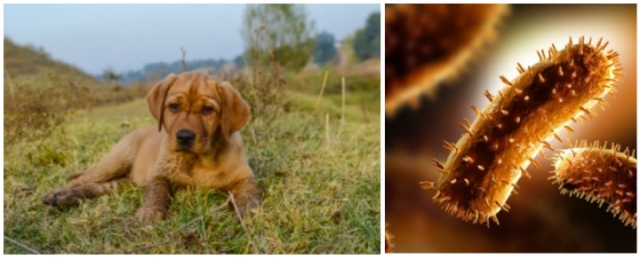
Dogs and Rabies, 8 Cuddly Creatures and the Dark, Deadly Diseases They Carry
Rabies can be spread through a dog’s bite. This clever virus is able to travel along nerves all the way to the brain, where it wreaks havoc on the nervous system. Animals infected with rabies show erratic physical movements and can develop paralysis. Other symptoms include having difficulty swallowing, leading to a fear of water (“hydrophobia”) and subsequent drooling. So to keep Fido (and yourself) from foaming at the mouth, make sure to get your puppy pals vaccinated!

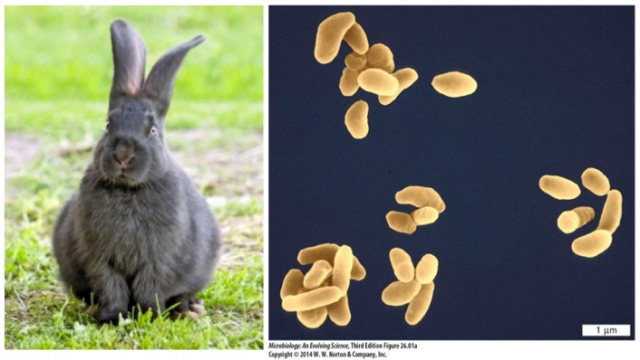
3. From the Easter Bunny to Peter Rabbit, rabbits have had their place in our childhood stories. But beware the nightmare: those cute bunnies may carry a bacterium called Francisella tularensis.

Rabbit and Francisella bacterium, 8 Cuddly Creatures and the Dark, Deadly Diseases They Carry
Depending on where the bacterium first contacts its host, Francisella can cause a variety of symptoms in a disease called tularemia. Symptoms of tularemia include ulcers in the skin, pneumonia, vomiting and more rarely, liver and spleen problems.

4. Slow and steady, those long-living turtles seem to represent all that is patient and wise.

Turtles and Salmonella, 8 Cuddly Creatures and the Dark, Deadly Diseases They Carry
They also carry Salmonella, a bacterium that when ingested can cause a potential life-threatening disease whose symptoms include vomiting, diarrhea, and headaches. RecentSalmonella outbreaks have been attributed to contaminated produce (and to pet bearded dragons in 2014), and the CDC estimates that nearly 1.2 million individuals become infected each year, leading to approximately 450 deaths.

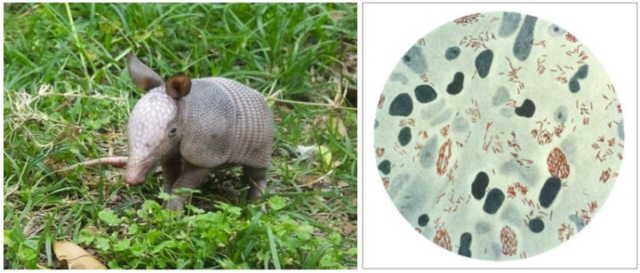
5. These cute armored creatures can swim, run, climb, and roll into balls.

Armadillo and Mycobacterium leprae, 8 Cuddly Creatures and the Dark, Deadly Diseases They Carry
The nine-banded armadillo is a reservoir for the bacterium Mycobacterium lepraeMycobacterium leprae causes leprosy, a devastating disease that causes nerve damage and horrific skin lesions.

6. The child’s favorite pet, hamsters are mostly harmless, except when they carry the LCM virus.

Hamsters and the LCM virus (Lymphocytic choriomeningitis, 8 Cuddly Creatures and the Dark, Deadly Diseases They Carry LCM, or lymphocytic choriomeningitus, causes inflammation of the wrappings of the brain and spinal cord. This virus can be acquired by individuals who come in to contact with fresh urine, droppings or dirty bedding from infected rodents, so avoid touching your eyes, nose and mouth while handling your furry friend or cleaning their cage.

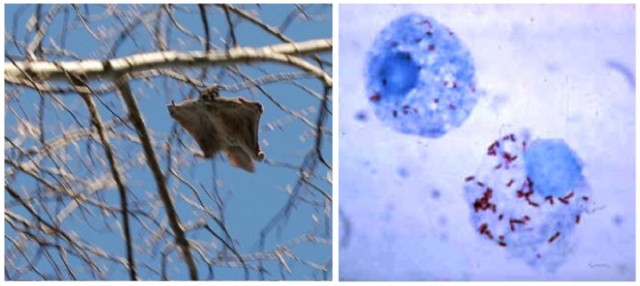
7. Is that a bird? Is that a plane? No, it’s a flying squirrel!

Flying squirrel and Rickettsia prowazekii, Flying squirrel and Rickettsia prowazekii
And its cargo just might be Rickettsia prowazekii, a bacterium that causes the infamous typhus fever. Infection initially presents with a rash followed by muscle pain and fever which usually last 7-10 days.

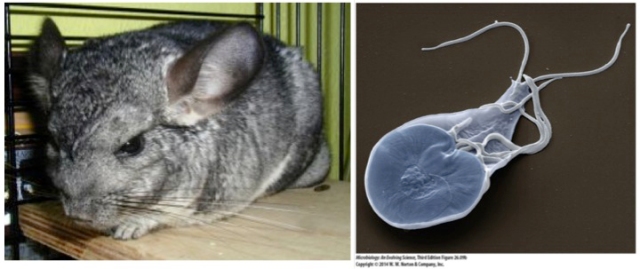
8. It’s fun to say ‘chinchillas’ and it’s fun to play with a chinchilla.

Chinchilla and Giardia, Chinchilla and Giardia
But it’s not fun to get Giardia from these little furballs! Giardia is a parasite with a whiplike tail or “flagella” that is commonly found in bodies of water. Interestingly, a study done in Belgium in 2010 found that 66% of pet Chinchillas tested were infected with Giardia. Infection with Giardia, the most frequently diagnosed intestinal parasitic disease in the US, causes an uncomfortable diarrheal disease that can last for multiple weeks and cause severe dehydration.

Take-Home

Your cuddly furry friends can still be your best friends. Just be observant of strange behaviors and signs, get your pets vaccinated if possible, wash your hands after playing with them, and if Junior dares his brother to lick the pet turtle, tell him that is a very bad idea.
Contributed by: Dr. William Sullivan Jr.’s Laboratory, Department of Pharmacology & Toxicology, Microbiology & Immunology at IUSM: Sherri Huang, Imaan Benmerzouga, Joe Varberg, Michael Harris, Leah Padgett, Victoria Jeffers, William Sullivan Jr.

Thursday, October 23, 2014

The Monster Mash – Diseases That May Have Spawned Monster Legends

We’ve all been there. Sick with the flu, we stagger around the house in a feverish state. With our baked minds marinating in a cauldron of cytokines, we can hardly formulate a complete sentence. Droopy-eyed and disheveled, we nearly scare ourselves to death when gazing at the reflection of our barely recognizable self. Terrified out of her diaper, your toddler may even run away from you with a frightful scream. As you’ll learn from the list below, there are several diseases that produce symptoms that mimic characteristics associated with legendary monsters.

Vampires

These blood-sucking creatures of the night are believed to have been inspired by the Romanian Prince Vlad, born in Transylvania in 1431. His father was named Dracul, and Dracula means “son of Dracul”. Dracula was a “defender of the Christian faith” who, ironically, gained notoriety by impaling his victims and dipping his bread in their blood before consuming it.
 
Prince Vlad before dinner (left) and after dinner (right).
 
However, the symptoms of porphyria (yes…it is pronounced poor-FEAR-e-uh!) are likely to have contributed to several aspects of vampire lore. While it sounds like a lost Def Leppard album, porphyria is actually a blood disorder that arises when patients cannot make and regulate heme properly (heme is a critical part of hemoglobin in the blood).

Porphyria can cause excessive nail growth and receding gums, the latter of which may make the canine teeth look more like fangs. Moreover, porphyria can cause skin to bubble and blister just minutes following exposure to sunlight. Look no further than 1985’s cult classic, Fright Night, to witness the awesome power of sunlight destroying a vampire.


Finally, to make up for the compromised hemoglobin production, the treatment for porphyria involves injecting patients with blood. Despite this parallel with vampirism, people with the disease do not “thirst for blood” or bite others.

Pluto from The Hills Have Eyes

Michael Berryman, best known for his portrayal of Pluto in the 1977 cult classic, The Hills Have Eyes, has an unforgettable appearance. While his role as a deranged desert cannibal haunted the dreams of millions, his character did not require hours in the make-up chair. Rather, his appearance is attributable to a rare genetic condition known as hypohidrotic ectodermal dysplasia. People with this syndrome have fewer sweat glands, sparse body hair, and missing or abnormal teeth. In addition, facial features of these individuals tend to be consistent with those seen in Berryman’s photo below. Other than heat intolerance due to a reduced ability to sweat, people with hypohidrotic ectodermal dysplasia are otherwise healthy.
 
Instantly recognizable on screen, Berryman has appeared in dozens of subsequent roles, including multiple appearances in Star Trek episodes and films.

Werewolves

On the opposite end of the spectrum, people with excessive hair, especially when it appears on the face, have long been attractions at circus sideshows. Perhaps the most famous is Julia Pastrana, also known as “the bearded lady” or “ape woman”, who caught the attention of many onlookers during her travels with “the freak show” in the 1800s. There is a name for this condition, which often resembles the classic appearance of a werewolf:  congenital hypertrichosis lanuginosa, or CHL. Babies born with CHL are usually covered in hair right out of the womb. Today, people afflicted with CHL can elect to have that hair removed with lasers.

“Don’t worry, it’s just a little hypertrichosis flare-up!”

Demonic Possession

Schizophrenia or multiple personality disorders are often cited as likely explanations for people exhibiting unusual behaviors. But an autoimmune disease called “anti-NMDA receptor encephalitis” has been recently described that also produces striking symptoms of demonic possession. A first-hand account of this ailment was written by Susannah Cahalan called, Brain on Fire: My Month of Madness.

 
Incidentally, anti-NMDA receptor encephalitis does not induce the green projectile vomiting made famous in The Exorcist. You have to go to Taco-Bell for that.

Zombies

There are a number of conditions that give people a zombie persona, such as that window of time from waking up till you get some coffee in you. While there is no disease that allows you to persist as an undead, brain-hungry zombie, there is a famous one that can drive animals to bite others:  rabies. Rabies is caused by a virus, and, thanks to Stephen King’s Cujo, most of us are familiar with how rabies can transform a puppy into a hellhound. The virus is plentiful in the salvia of infected animals and is transmitted through a bite or scratch. Many pathogens change the behavior of their host in order to spread. The rabies virus infects the brain in such a way that its host organism becomes overly aggressive, increasing the odds that the virus will be transmitted to a new victim through a bite.

Another type of disorder can lead to an eerie change in behavior with shades of zombification. A rare mental illness called Cotard delusion, or walking corpse syndrome, occurs when the afflicted no longer believe they are alive. First described in 1880 by neurologist Jules Cotard, this “delirium of negation” can run from mild self-loathing to severe depression. In the most extreme cases, the afflicted will deny the existence of certain body parts or their entire body. Consequently, they will stop taking care of themselves, even to the point of starving to death.

 
Marilyn Manson or ‘Cotard delusion’ support group?
 
For some interesting examples of zombification in wildlife, be sure to read Mark’s recent post, “Zombies And The Loss Of Free Will”.


Contributed by:  Bill Sullivan
Follow Bill on Twitter: @wjsullivan

 
Schulenburg-Brand D, Katugampola R, Anstey AV, & Badminton MN (2014). The cutaneous porphyrias. Dermatologic clinics, 32 (3) PMID: 24891059

Deshmukh S, & Prashanth S (2012). Ectodermal dysplasia: a genetic review. International journal of clinical pediatric dentistry, 5 (3), 197-202 PMID: 25206167

Kaur S, Juneja M, Mishra D, & Jain S (2014). Anti-N-methyl-D-aspartate receptor encephalitis: A case report and review of the literature. Journal of pediatric neurosciences, 9 (2), 145-7 PMID: 25250071

Ramirez-Bermudez J, Aguilar-Venegas LC, Crail-Melendez D, Espinola-Nadurille M, Nente F, & Mendez MF (2010). Cotard syndrome in neurological and psychiatric patients. The Journal of neuropsychiatry and clinical neurosciences, 22 (4), 409-16 PMID: 21037126

Wednesday, September 10, 2014

Midi-chlorians gave Jedi knights their power. Is there something like this on Earth?

Star Wars Episode VII is happening, to the cautious delight of many longtime fans of the franchise. Replacing George Lucas at the helm is J.J. Abrams, who successfully rebooted the Star Trek franchise.

The cast for Star Wars Episode VII meeting with Yoda J.J. Abrams
Fans are waiting with bated breath to see whether he does a better job than Lucas did with the Star Wars prequels, which caused a great disturbance in the Force. While Jar Jar Binks soured the prequels for most people, one of the other sticking points was the Midi-chlorians. The what? Let's review. In the original series, the Force was described by Obi-Wan Kenobi as "an energy field created by all living things. It surrounds us, penetrates us, and binds the galaxy together." In episode I, Qui-Gon Jinn delivered the buzzkill message that the mysterious Force actually had a biological explanation. Instead of saying, “The Force is strong with this one”, one may as well say, “The Midi-chlorians are numerous in this one.”

According to Wookieepedia, “Midi-chlorians were intelligent microscopic life forms that lived symbiotically inside the cells of all living things. When present in sufficient numbers, they could allow their host to detect the pervasive energy field known as the Force.” A collective groan could be felt through movie theatres worldwide, as if millions of voices suddenly cried out in terror…

To a cell biologist, it sounds like Lucas drew his inspiration from the mitochondria, which are bacteria-like symbionts that work with our cells to provide energy. They even look like they might be cousins (see below). But that is where the similarities end. Unlike Midi-chlorians, mitochondria do not allow us to tap into energy fields…no matter how much we try to quiet our minds to hear our mitochondria speak to us.

Midi-chlorian (left) and mitochondria (right). Brothers from another mother?
 
But a strange and provocative paper by Alexander Panchin and colleagues proposes an unorthodox new idea called the “biomeme hypothesis”, which posits that the impulse behind some religious rituals could be driven by mind-altering parasites.

Let that sink in for a moment. Might your religion, or any number of other activities, be driven in part by parasites or symbionts in your brain? Before you dismiss the idea too quickly, think about the rabies virus. This super tiny virus is notorious for altering the behavior of dogs (and other animals, including people). Rabies can make even the most docile of dogs become uncharacteristically aggressive so that they bite and spread the virus. Rabies virus is just the tip of the iceberg; there is no shortage of parasites that are known to eerily alter their host’s behavior.

Rabies makes dogs aggressive to enhance viral transmission. The virus can get into a new host by causing its current host to bite others.
Central to Panchin’s hypothesis is the idea that certain religious rituals may facilitate the transmission and spread of parasites. The authors site that holy springs and holy water are replete with numerous microbes, including human pathogens. Sacred in Hinduism, the Ganges River probably contains the most, as an estimated 200 million liters of untreated human sewage is dumped into it every day. Bathing in this “purifying” water has led to the development of multiple diseases, such as cholera.  The Hindu “side-roll” ritual is associated with Cutaneous Larva Migrans, also known as “creeping eruption of the skin”, which is caused when the skin becomes infected with parasitic hookworm larvae. Performed in Muslim communities, ritual ablution, which involves irrigation of the sinuses, has been proposed to be a potential risk factor in contracting Naegleria fowleri (the infamous “brain-eating amoeba”) in Muslim communities. Outbreaks of respiratory infectious diseases and meningococcal disease are common amongst Hajj congregation in Mecca. The transmission of herpes has been reported in the Jewish circumcision method known as metzitzah, which involves the sucking of blood from the wound. Finally, many sacred relics are kissed or handled by many worshipers, offering additional routes for the potential transmission of multiple infectious agents.

While it is clearly demonstrable that certain religious rituals have inherent health risks, there currently is no direct evidence that any of the possible infections transmitted can influence the victim’s behavior (other than causing them to see a doctor). Until new data arrives, we are left with the conclusion that the rituals people engage in stem from cultural memes rather than biological. But one thing is clear:  you should use some hand sanitizer next time you dip your fingers in the holy water.

Contributed by:  Bill Sullivan
Follow Bill on Twitter
 
 
Panchin AY, Tuzhikov AI, & Panchin YV (2014). Midichlorians--the biomeme hypothesis: is there a microbial component to religious rituals? Biology direct, 9 (1) PMID: 24990702