Showing posts with label Toxoplasma. Show all posts

Wednesday, July 18, 2018

If Parasites Had Dating Profiles

Once upon a time, before the Internet, people actually had to venture outside to find a significant other. Popular places to find a potential mate included bars, dance clubs, dog parks, cafes, parties, and the gym. You’d have to work up the courage, and perhaps a cringe-worthy pick-up line, to ask another person out on a date. After an overpriced dinner and movie, you’d have to engage in lengthy conversation under a starry sky to learn about them.

But who has time for all that?! These days, you can simply screen dozens of candidates by reading their dating profiles on matchmaking web sites or apps like Tinder. This modern form of mate selection is unique to humans; imagine if other creatures in the natural world, like parasites, had to write dating profiles…

Toxoplasma gondii

Hanging with my BFFs in a tissue cyst.
We call ourselves "The Brady Bunch"!
Photo by David Ferguson (via EurekAlert)
Do you love cats? So do I! They’re my favorite animal, although I can weasel my way into any vertebrate animal that I want to, including weasels. That’s one of the reasons why I’m called “the most successful parasite on Earth.” I’m the clever parasite that has learned to manipulate the brains of rodents so that they become fearless morons around felines. Normally, mice and rats scurry away from the scent of a cat, but not when I’m in their head!

What turns me on? Long, romantic walks through the hollows of a cat’s innards. I like to groove under the moist sheets of their intestinal epithelium to the musical stylings of Cat Stevens. If we have kids, I promise to be a good parent and read Calvin and Hobbes to them all night long. I’ll be sure to kiss them goodbye before sending them out into the world to contaminate litter boxes, sandboxes, gardens, yards, and streams. Before long, our progeny will be inhaled or ingested by unsuspecting animals.

When I get into something that is not a cat, I get bored rather quickly and go to sleep. You can call me bradyzoite when I’m napping. Life in my intermediate host isn’t all that bad. I can pick pretty much whatever cell type I want and make it my room. The neurons in the brain are ideal because the pesky immune system tends to leave that organ alone, so I get plenty of peace and quiet. I just chill and wait for that animal to get eaten, hopefully by a cat so I can get my groove on again! What if another type of animal eats me instead? No biggie. I’m a patient parasite and will simply wait it out in another intermediate host.

Like I said before, if I landed in a rodent I know how to scramble their tiny brains to increase their chances of getting eaten by a hairball-coughing feline. The human brain is a tad more complex and taking me a little longer to figure out. While knocking around in a human head, I might have increased the risk of some people to develop schizophrenia or rage disorder. But ultimately, I’m trying to rewire the human brain so they leap into lion cages at the zoo.

In my spare time, I love to devour books instead of organ meat. My favorite books include Cat’s Cradle, The Pink Panther, The White Tiger, and of course The Cat in the Hat. I’m also writing my own book. It’s called If You Give A Mouse Toxoplasma…

Schistosoma mansoni

Come swim with Schisto!
Photo: http://schaechter.asmblog.org/.a/
6a00d8341c5e1453ef014e875d2f3e970d-popup
Escargot, anyone? My name is Schistosoma, but you can call me Schisto. I live in parts of South America and the Caribbean, Africa, and the Middle East. I hope you don’t think I’m being too fresh, but I’d love to start our date by skinny dipping in my favorite freshwater lake. After we’re done frolicking in the water, we’ll sneak into some snails and develop into cercariae. What? You’ve never been a cercariae before? Have no fear, my darling, I will teach you how to become one. Once we’re cercariae, we’ll break out of the snail and search for the definitive stop on our romantic adventure: an unsuspecting human swimming in our waters.

The cool thing about becoming cercariae is that we’ll look like a mermaid. We’ll gain a gorgeous forked tail that will help us swim around and find a suitable human to invade. I like to hum the theme to Jaws as I make my approach to the human creature! Do you know how many people are attacked by sharks each year? Only 75. I've infected well over 200 million people, but sharks get the scary theme song...go figure!

I think you’ll be surprised how easy it is to burrow into a human's skin – I prefer to enter through a hair follicle. They don’t feel a thing. Once we get inside a human, we can ditch our tails and I’ll give you a grand tour. After a few days gallivanting through the skin, we’ll hang out in the lungs, go through the heart, and then enjoy a bloodmeal as we take a ride in the circulatory system to the liver. This is the stop I find most arousing, and I’ll ask you to pair-bond with me. If you accept, we’ll celebrate by making our way to the veins draining the colon.

Why the veins of the colon? I’m glad you asked, my pet! You see, the colon is where the human stores his waste until he can’t hold it in any longer. We can easily send our eggs into his colon, giving our kids a free ride back out into the water so they can find snails of their own one day. It’s a strategy not unlike the one used by Han Solo in The Empire Strikes Back when he evaded the Star Destroyer by making it appear his ship was just a part of the Imperial garbage.

I think you’ll find that the chemistry between us is no fluke, but rather truly meant to be.

Trypanosoma cruzi

Come cruzi with me! I'm the cute wavy purple things!
Photo: Wikipedia Commons
What could be more romantic than a date that involves a “kissing” bug? That is where our enchanting evening shall begin. From inside the so-called kissing bug, we will watch it latch onto human flesh and suck its blood – cool, huh? After the kissing bug has its fill, it gets the urge to go to the bathroom, using the tiny wound it made as a toilet. That will be our cue to exit: out of the kissing bug, into the human – right through that convenient little hole the bug made in its flesh.

Once under the human’s skin, we’ll transform from trypomastigotes into amastigotes while inside the host’s cells. I hope you don’t think I’m being too prudish, but I’m really not all that into sex. I’d prefer that we multiply on our own, but how about this…we can watch each other divide!

After we make clones of ourselves, there will be too many for the host cell to hold. I just love it when a host cell pops, don’t you? As trypomastigotes again, we’ll be free floating in the blood, where we will hitch a ride when the next hungry bug comes along to “kiss” our human host.

I just hope the kids we leave behind don’t cause trouble. Most of the time when I go through a human, my kids get all rowdy and start having a bunch of kids of their own. The extensive damage they leave in their wake can cause serious problems for the human host, which they call Chagas disease.

While waiting for a kissing bug to pick me up, I enjoy listening to music. Some of my favorite songs include Kiss Me Deadly, Love Bites, and Blow Me (One Last Kiss).

Plasmodium falciparum

I'm a little camera shy, but I like these plushies of me
as they show my softer side!
Photo: Giant Microbes
If you have a fetish for vampires or other blood-sucking creatures, I am the parasite for you! My name is Plasmodium, but most people know me as malaria, which means “bad air.” I hasten to clarify: I do not suffer from flatulence or rancid breath. Before people realized I was a parasite, they attributed the cause of malaria to breathing in “bad air.”

Two of my favorite things in life are blood and sex. I use humans for blood and Anopheles mosquitoes for sex. You might not think that there is enough room in the gut of a mosquito to have a lot of great sex, but give me a chance and I’ll show you that size isn’t everything. After the love making, we’ll take a lovely stroll up to the mosquito’s salivary glands and take a little nap before dinner. While we’re in the salivary glands, you can call me sporozoite.

The mosquito will be our limo to a fine human restaurant where the blood flows like wine. We will get our wake-up call when the mosquito bites a person; then hang tight while we take an exhilarating slide down her proboscis and into a red river. After a quick pit stop in the liver to transform into merozoites and put on our bibs, we’ll jump back into the red river and take our pick at which blood cell we’d like to dine at first. All the hemoglobin you can eat! We will be the envy of Count Dracula!

In humans, red blood cells carry oxygen around the body, so as we destroy them, our human host will soon feel woozy, suffering from anemia, chills, and fever. But have no fear, as I’ll send out an SOS that changes our victim’s scent to be more attractive to mosquitoes. Before you know it, we’ll be pulled up into a fresh mosquito for some more amore.

I’m also a huge movie buff. My favorite movies are The Mosquito Coast, There Will Be Blood, Jungle Fever, and Red River.


Contributed by: Bill Sullivan
Follow Bill on Twitter.

Friday, February 16, 2018

Can Your Cat Cause Demonic Possession?


Cats are routinely associated with malevolent entities in horror stories. They are the favorite pet of witches and villains, a frequent denizen of haunted houses, and the object of several superstitions. Now doctors have linked felines to demonic possession!

Wait, what?

In a new case study published yesterday in the journal Medicine, scientists in China reported that acute infection with the common parasite Toxoplasma gondii triggered the onset of an unusual autoimmune disease called anti-N-methyl-D-aspartate (NMDA) receptor encephalitis. Anti-NMDA receptor encephalitis occurs when the body attacks one of its own brain proteins, leading to bizarre personality changes that mimic the stereotypical behaviors that come to mind when we think about demonic possession.

In this case report, a nine-year-old girl arrived at the hospital with seizures, headache, and vomiting. Then she developed unexplained personality and behavior changes. She tested positive for both anti-NMDA receptor antibodies and recent infection with the Toxoplasma parasite.

Anti-NMDA receptor encephalitis was the subject of the bestselling book, Brain on Fire: My Month of Madness, by Susannah Cahalan. In this memoir, which reads like an episode of Mystery Diagnosis, Cahalan describes her terrifying transformation from a vibrant young journalist to an unrecognizable and violent monster. As her condition progressed, she grew paranoid of others, thought family members were imposters, and lashed out at people. She lost control of her bodily movements, suffered seizures, and spoke in tongues. If you didn’t know better, you’d claim she needed an exorcist. Luckily, a neurologist properly diagnosed her disease and gave her immune suppressant drugs that drove it into remission.


Did Regan have a cat?
It is not clear why some people (mostly women) start making antibodies that attack the NMDA receptors in their brain. Some cases are linked to the development of tumors, especially teratomas in the ovaries. Certain viruses that infect the brain, including herpes simplex virus, have also been linked to anti-NMDA receptor encephalitis. Now it seems Toxoplasma, which also infects the brain, may be a trigger of this haunting disease, too.

Toxoplasma is a devious parasite with a complex life cycle. It is capable of infecting any warm-blooded animal, but can only complete its sexual cycle in the intestines of cats. After infecting a cat, the cat spews billions of infectious parasite oocysts into the litter box (or the environment) for up to two weeks. These oocysts are very sturdy and can last up to two years in the environment, giving them plenty of time to be inhaled or ingested by another animal (including humans). In addition to picking up oocysts from the litter box, garden, or sandbox, we can also acquire the infection by eating undercooked meat or unwashed fruits and vegetables.

Once a person becomes infected, the parasite disseminates throughout bodily tissues, including the brain and heart, and transitions into a latent stage called the tissue cyst. While current treatments can stop the parasite from replicating, no drug exists that can get rid of the tissue cysts. In other words, infection with Toxoplasma is permanent. The thought of having a brain filled with these parasites is disquieting, but most scientists believe the cysts are inert unless the individual becomes immune compromised, in which case the parasites can cause massive tissue damage from unchecked growth.

A growing number of scientists argue, however, that in certain individuals the Toxoplasma tissue cysts are not benign and may cause neurological disorders. One of the better-established correlations is the link between Toxoplasma infection and schizophrenia. Interestingly, up to 10% of schizophrenia patients test positive for anti-NMDA receptor antibodies.

The mechanism explaining how Toxoplasma infection may cause anti-NMDA receptor encephalitis remains to be elucidated. Toxoplasma infection is remarkably common (up to one-third of the global population is believed to carry this parasite), but anti-NMDA receptor encephalitis is rare. For now, the authors of the study advise that clinicians assess the possibility of Toxoplasma infection when evaluating a patient with anti-NMDA receptor encephalitis.

To prevent Toxoplasma infection and minimize your chances of becoming possessed by this parasite, be sure to thoroughly cook meat and wash produce and veggies. Wear gloves and a mask when gardening and keep sandboxes covered when not in use. You cannot catch Toxoplasma by petting your cat, but it is important to clean the litter box promptly and wash your hands with soap and water. Pregnant women, in particular, should heed these warnings as infection during pregnancy can lead to miscarriage or serious congenital birth defects. See the infographic below for more.

UPDATE (7/26/18): A new study was published today by Li et al. that used a mouse model of infection to show that anti-NMDA receptor autoantibodies are induced by the presence of latent Toxoplasma tissue cysts.

Brain on Fire has also been made into a movie that can be seen now on Netflix.
Contributed by: Bill Sullivan

Friday, May 12, 2017

Could Parasites Be Causing Prostate Cancer?


Long ago in the mid-1600s, a fellow named Antonie van Leeuwenhoek started making lenses…as a hobby (remember, Facebook and Netflix were not invented yet). He was so adept at grinding glass that his lenses were able to magnify objects about 270 times their normal size. Leeuwenhoek soon discovered a whole new universe right here on earth, a universe of creatures so tiny that only his microscope could reveal them. He called them "animalcules."

With his powerful microscope, Leeuwenhoek became the first person to see amoebae, bacteria, and blood cells. For these revolutionary discoveries, he is considered “the father of microbiology.”

But after looking at endless water samples, the ever-curious Leeuwenhoek wondered what bodily fluids looked like under his microscope. While Leeuwenhoek examined blood, sweat, and tears (and a lot of dental plaque), a medical student in 1677 named Johan Ham told Leeuwenhoek that he spotted animalcules swimming in the semen he collected from a gonorrhea patient.

Believing these animalcules might be a result of disease, Leeuwenhoek procured a clean semen sample from his own stock - obtained fresh after proper lovemaking with his wife, he insisted. Leeuwenhoek confirmed Ham's finding and went on to discover the same tiny eel-like critters teeming in the semen from many other species. This is how we came to make the “seminal” discovery of sperm cells.

Other people in Leeuwenhoek’s day mistook these microscopic beasties squiggling around in the semen to be "merely" parasites, referring to them as “seminal Worms.” In fact, we didn’t realize that these “semen parasites” played a key role in fertilization until the 1870s when Oscar Hertwig spotted the fusing of nuclei from sperm and egg after contact…in sea urchins of all places.

We didn’t figure out where babies come from until fairly recently – 1870. White studying sea urchins, Oscar Hertwig noticed that the nucleus in the sperm fuses with the nucleus in the egg (the nucleus is the cellular organelle housing DNA).

While the mystery of sperm has been solved, we have indeed discovered a variety of pathogens that can inhabit our nether regions. Trichomoniasis, scrotal filariasis, and Chlamydia are just some of the unpleasant conditions caused by these most intimate of uninvited guestsAn unsettling new study led by graduate student Darrelle Colinot at the Indiana University School of Medicine may have found yet another.

In experiments performed in mice, researchers found that the common single-celled parasite called Toxoplasma gondii disseminates to the prostate within two weeks after infection. And there it remains in the form of latent tissue cysts for at least sixty days, but probably for the rest of the host’s life. The presence of these parasitic cysts led to chronic inflammation in the prostate, which is a precursor to benign prostatic hyperplasia (BPH), the reason why older men have to get up multiple times to pee at night. Chronic inflammation in the prostate is also connected to prostate cancer, which afflicts more than 200,000 men in the US each year.

Parasites in prostates. The control panel shows cells from an uninfected mouse prostate (the nuclei are stained blue). The other panel shows the presence of a Toxoplasma tissue cyst (green) in the prostate 14 days post-infection (14 D.P.I.).

If Toxoplasma is also found to trigger chronic inflammation in human prostate, the finding takes on added significance given the prevalence of the parasite in the human population. According to the CDC, up to 22% of Americans are infected with the parasite, which is transmitted through oocysts that are excreted into the environment by infected cats or through tissue cysts present in game and livestock. 

Women are commonly advised to avoid gardening, changing the litterbox, and consuming undercooked meat while pregnant so the parasite doesn’t transmit to the fetus. Men may need to heed these warnings as well to avoid a prostate full of parasites, but a lot of critical work still needs to be done before we can ascertain whether this discovery has relevance to prostate issues in humans. Regardless, our study introduces Toxoplasma-infected mice as a powerful new model for the study of prostatic inflammation.

Prostate cancer is believed to arise from a constellation of events that can involve a person’s genes and environmental exposures. Infectious agents and carcinogens have previously been proposed as agents that can injure the prostate and lead to the development of chronic inflammation. Numerous types of bacteria and viruses have been shown to infect the prostate and cause an inflammatory response; this new study in mice suggests that the parasite Toxoplasma might be added to this list.

Contributed by:  Bill Sullivan

Note:  Bill Sullivan is a co-author on the study highlighted in this article.


Reference:


Colinot, D., Garbuz, T., Bosland, M., Wang, L., Rice, S., Sullivan, W., Arrizabalaga, G., & Jerde, T. (2017). The common parasite induces prostatic inflammation and microglandular hyperplasia in a mouse model The Prostate DOI: 10.1002/pros.23362

Thursday, January 7, 2016

Daraprim: The 62 Year Old $750 Pill

In September 2015, the CEO of a new company called Turing Pharmaceuticals gained instant notoriety when he jacked up the price of a little known drug called Daraprim from $13.50/pill to $750/pill. Turing is not the first company to raise drug prices to astronomical levels, but the Daraprim situation is unique for a number of reasons. First, Turing inflated the cost of Daraprim over 50-fold overnight, making it one of the largest jumps in a drug’s price ever. Second, the company did not invent or improve upon Daraprim; this drug is 62 years old and all Turing did was pony up $55 million to acquire the rights to it.

Martin Shkreli, who unapologetically increased the cost of Daraprim by 5,500%, has been dubbed “Pharma Bro” and “the most hated man in America” by various media outlets.
Third, the company justified the huge price increase by stating that it will use a portion of the profits to invest in generating better drugs for toxoplasmosis, the neglected disease that Daraprim treats. This reverses the polarity of drug development:  most pharmaceutical companies use money they’ve already raised or earned to develop a new drug. But Turing already has the drug and claims that it will develop a better drug with the profit made from overcharging current patients. Many would argue that Turing should have used the $55 million to develop a new toxoplasmosis drug in the first place, rather than gouge current patients and further strain the US health care system. Moreover, the patients who are forced to pay for this research will not get their money back if Turing fails to deliver, which is often the case in drug research.

The world had Daraprim before Elvis had a song played on the radio!
In addition to highlighting problems with the nation’s policy on drug pricing, the situation has also taken toxoplasmosis from the shadows and into the limelight. This disease is caused by a single-celled parasite called Toxoplasma gondii. The parasite infects nearly anything with a backbone, but animals (including people) that have a healthy immune system keep the parasite in check, locking it into a latent, encysted form. If immunity deteriorates due to disease, such as HIV/AIDS, or chemotherapy, such as that given to fight cancer, the latent Toxoplasma parasites will start replicating again, leaving massive tissue destruction in their wake. If you want to learn more about Toxoplasma parasite, you can do so here.

In the center of this heart tissue is a tissue cyst filled with latent Toxoplasma parasites. These parasites can start growing again if immunity is compromised, causing rapid damage to the heart. The parasite cysts also reside in the brain, creating serious neurological problems if the disease is reactivated.
Toxoplasmosis can be life-threatening if not treated promptly. So how does Daraprim help save lives?

Daraprim is the trade name for pyrimethamine, the chemical structure shown here. $750 will buy you a single pill. A standard round of treatment for toxoplasmosis is usually a month, putting the cost at ~$22,500. Unfortunately, this drug only puts the disease into remission, so the patient typically needs additional courses throughout his or her lifetime.
Daraprim is an antifolate drug; as you may surmise, taking it leads to a depletion of the B-vitamin called folate. Folates are absolutely required by all living cells to make genetic material such as RNA and DNA. Everyone knows we need folate in our diet or else we may suffer from anemia, digestive issues, cognitive defects, or growth problems. But what you may not know is that all living things need folate – bacteria, fungi, and parasites like Toxoplasma.

Pyrimethamine targets an important enzyme in the folate metabolic pathway called DHFR (dihydrofolate reductase). By inhibiting DHFR, pyrimethamine stops the conversion of dihydrofolic acid to tetrahydrofolic acid, the latter of which is needed to make purines and thymidylate, molecules that are required for DNA and RNA synthesis. If germs can’t make DNA or RNA, they simply cannot grow anymore.

Like trimethoprim, pyrimethamine is an inhibitor of the enzyme DHFR. Sulfa drugs (sulfonamides) are also added to the treatment regimen as they serve to block the upstream step of folate metabolism, delivering a one-two punch to the pathogen.
Hopefully you can now see why Daraprim kills parasites like Toxoplasma, but you may be wondering why the drug doesn’t also kill the patient. Truth is, at high enough concentrations for a long enough time, Daraprim can kill a person. But the risk is offset for two main reasons. One, pyrimethamine binds to the parasite form of DHFR much better than to the human form of DHFR. Both Toxoplasma and human DHFR function the same way, but there are subtle differences in the enzyme’s structure between the pathogen and the patient that make it bind to the drug with different affinity. Said another way, if you consider Daraprim to be like a piece of metal, then the parasite DHFR enzyme is like a stronger magnet than the human DHFR enzyme. Two, a patient taking Daraprim is usually given folinic acid (leucovorin), which converts to tetrahydrofolic acid without the need for DHFR.

Pyrimethamine was developed by Nobel-Prize winning scientist Dr. Gertrude Elion in the early 1950s. Dr. Elion was also instrumental in the development of acyclovir for herpes viruses. I wonder what she would say to Mr. Shkreli.
The discovery of pyrimethamine as a potent anti-parasitic agent many years ago marked a great advance in the medical sciences. It is a shame we let the clay from the best minds get molded by the worst hands.

Contributed by:  Bill Sullivan, Ph.D.


Roos DS (1993). Primary structure of the dihydrofolate reductase-thymidylate synthase gene from Toxoplasma gondii. The Journal of biological chemistry, 268 (9), 6269-80 PMID: 8454599

Sullivan WJ Jr, & Jeffers V (2012). Mechanisms of Toxoplasma gondii persistence and latency. FEMS microbiology reviews, 36 (3), 717-33 PMID: 22091606

Tuesday, June 2, 2015

8 Cuddly Creatures and the Dark, Deadly Diseases They Carry

This is the winning entry submitted for the "Buzzfeed Research Contest" organized by Melanie Fox at BORN TO SCIENCE at the Indiana University School of Medicine.

1. With their fluffy fur coats and fun personalities, some say cats make the best pets. Others say cats are evil.


Cats are the definitive hosts for the parasite Toxoplasma gondii. Pregnant women are asked not to change their cat litter boxes because these parasites can be transmitted through feline waste. If a mother becomes infected during pregnancy, the parasite can cross the placenta and infect the fetus, causing catastrophic effects including brain damage, blindness and even death.

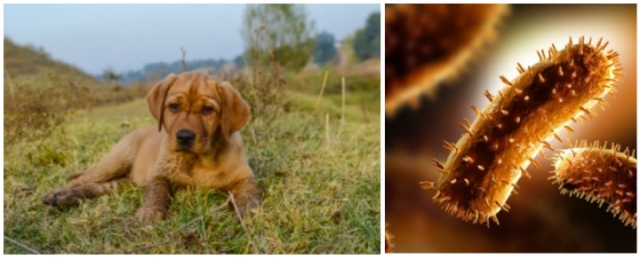
2. Sometimes the dog’s bite is indeed worse than its bark!

Dogs and Rabies, 8 Cuddly Creatures and the Dark, Deadly Diseases They Carry
Rabies can be spread through a dog’s bite. This clever virus is able to travel along nerves all the way to the brain, where it wreaks havoc on the nervous system. Animals infected with rabies show erratic physical movements and can develop paralysis. Other symptoms include having difficulty swallowing, leading to a fear of water (“hydrophobia”) and subsequent drooling. So to keep Fido (and yourself) from foaming at the mouth, make sure to get your puppy pals vaccinated!

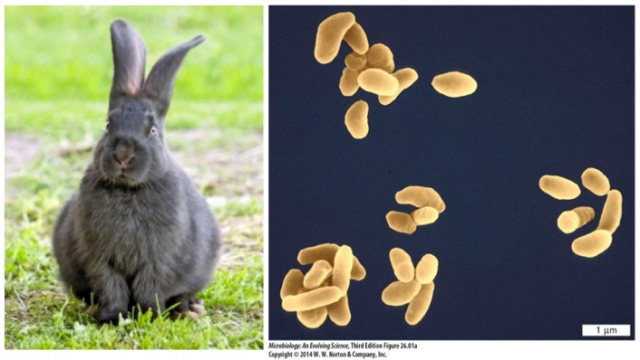
3. From the Easter Bunny to Peter Rabbit, rabbits have had their place in our childhood stories. But beware the nightmare: those cute bunnies may carry a bacterium called Francisella tularensis.

Rabbit and Francisella bacterium, 8 Cuddly Creatures and the Dark, Deadly Diseases They Carry
Depending on where the bacterium first contacts its host, Francisella can cause a variety of symptoms in a disease called tularemia. Symptoms of tularemia include ulcers in the skin, pneumonia, vomiting and more rarely, liver and spleen problems.

4. Slow and steady, those long-living turtles seem to represent all that is patient and wise.

Turtles and Salmonella, 8 Cuddly Creatures and the Dark, Deadly Diseases They Carry
They also carry Salmonella, a bacterium that when ingested can cause a potential life-threatening disease whose symptoms include vomiting, diarrhea, and headaches. RecentSalmonella outbreaks have been attributed to contaminated produce (and to pet bearded dragons in 2014), and the CDC estimates that nearly 1.2 million individuals become infected each year, leading to approximately 450 deaths.

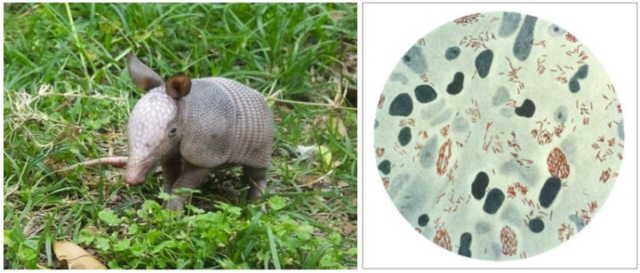
5. These cute armored creatures can swim, run, climb, and roll into balls.

Armadillo and Mycobacterium leprae, 8 Cuddly Creatures and the Dark, Deadly Diseases They Carry
The nine-banded armadillo is a reservoir for the bacterium Mycobacterium lepraeMycobacterium leprae causes leprosy, a devastating disease that causes nerve damage and horrific skin lesions.

6. The child’s favorite pet, hamsters are mostly harmless, except when they carry the LCM virus.

Hamsters and the LCM virus (Lymphocytic choriomeningitis, 8 Cuddly Creatures and the Dark, Deadly Diseases They Carry LCM, or lymphocytic choriomeningitus, causes inflammation of the wrappings of the brain and spinal cord. This virus can be acquired by individuals who come in to contact with fresh urine, droppings or dirty bedding from infected rodents, so avoid touching your eyes, nose and mouth while handling your furry friend or cleaning their cage.

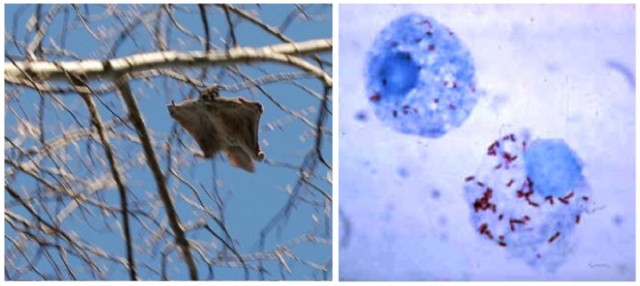
7. Is that a bird? Is that a plane? No, it’s a flying squirrel!

Flying squirrel and Rickettsia prowazekii, Flying squirrel and Rickettsia prowazekii
And its cargo just might be Rickettsia prowazekii, a bacterium that causes the infamous typhus fever. Infection initially presents with a rash followed by muscle pain and fever which usually last 7-10 days.

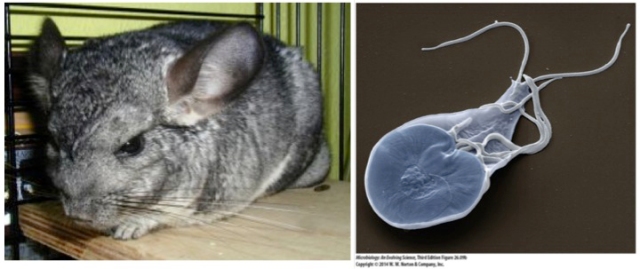
8. It’s fun to say ‘chinchillas’ and it’s fun to play with a chinchilla.

Chinchilla and Giardia, Chinchilla and Giardia
But it’s not fun to get Giardia from these little furballs! Giardia is a parasite with a whiplike tail or “flagella” that is commonly found in bodies of water. Interestingly, a study done in Belgium in 2010 found that 66% of pet Chinchillas tested were infected with Giardia. Infection with Giardia, the most frequently diagnosed intestinal parasitic disease in the US, causes an uncomfortable diarrheal disease that can last for multiple weeks and cause severe dehydration.

Take-Home

Your cuddly furry friends can still be your best friends. Just be observant of strange behaviors and signs, get your pets vaccinated if possible, wash your hands after playing with them, and if Junior dares his brother to lick the pet turtle, tell him that is a very bad idea.
Contributed by: Dr. William Sullivan Jr.’s Laboratory, Department of Pharmacology & Toxicology, Microbiology & Immunology at IUSM: Sherri Huang, Imaan Benmerzouga, Joe Varberg, Michael Harris, Leah Padgett, Victoria Jeffers, William Sullivan Jr.