Thursday, June 25, 2015

Allergies! Type I Hypersensitivity: When More Isn’t Better

Our last article discussed various hay fever inducing allergens encountered throughout the year. We learned that even for some of the most allergenic pollens, like birch and ragweed, only certain antigens derived from the pollen actually induce an allergic response. While the differences in the structure of these primary antigens can partially explain why some are allergenic and others are not, it really boils down to how the antigen interacts with an individual’s immune system. Some molecules make better allergens than others because they interact with the major player in Type I hypersensitivity, immunoglobulin E (IgE).

Interestingly, IgE earned its name based on the fact that it reacted with the ragweed pollen antigen E, now known as the primary ragweed antigen “Amb a 1”. In 1921, scientists K. Prausnitz and H. Kustner identified a serum component that was responsible for allergic reaction. It wasn’t until 1966 that T. and K. Ishikawa identified IgE as the serum component. Everyone has a small amount of this potent antibody circulating the blood; IgE accounts for less than 0.05-0.2% (0.1-0.4 μg/mL) of the circulating antibodies in non-atopic individuals. Some, but not all, atopic individuals have higher levels of circulating IgE, up to 0.79%.

Even Sabrina Fairchild knew that “More isn’t always better…sometimes it’s just more.”
In individuals without allergies, an IgE-mediated immune response occurs as a defense against parasitic infections. In this case, the resulting physiological changes clear the parasite and protect the body against further damage caused by the parasite. However, in individuals with allergies, the IgE-mediated response is classified as a Type I hypersensitivity.

Let’s follow a pollen grain on its first journey in an allergic individual. The first encounter of an allergen sensitizes the individual to that specific allergen, but symptoms are not experienced. Initially, the pollen particle encounters the peripheral defenses, nasal hairs, eyelids, and beating cilia in the throat. These hairs prevent most particles from entering the airway or sinuses. Pollen particles must be extremely tiny (about 1x10⁻⁶ meters) to pass through this initial barrier. Upon reaching the nasal mucosa, enzymes in mucous secretions break down the tough outer shell of the pollen (the exine), releasing the allergenic substance.
 
Antigen presenting cells engulf the allergenic substance, process it with enzymes, and display the antigen on the cell surface within a cradle-like protein called the class II major histocompatibility complex (MHC). Another type of immune cell, called T-helper, or Th, cells bind the presented antigen. Th2 cells release molecules called cytokines, which communicate to naive B cells to begin dividing and maturing. Some B cells differentiate into plasma cells, which produce and secrete a specific class of antibodies, or immunoglobulin (Ig). Humans produce 5 circulating antibody isotypes:  IgG, IgM, IgA, IgD and IgE. Particularly, Th2 cells produce the cytokines interleukin (IL)-4 and IL-13, which stimulate B cells to produce IgE. The allergic response appears to be localized, as plasma cells secreting IgE are 1000 times greater in nasal mucosa than in circulation.
In addition to producing the correct isotype, the plasma cells also produce highly specific antibodies that will bind the antigen tightly. Through the process of clonal selection and clonal expansion, a specific IgE molecule with high affinity for the antigen is produced en masse, creating an army like the clone troopers.
Although the army of IgE clones may not be as large as the clone troopers, it's every bit as powerful in wreaking immune havoc.
The circulating IgE has a specific receptor that allows it to bind tissue mast cells and blood basophils. At this point, the body is considered “sensitized” to the allergen. Additionally, memory B cells are formed in preparation for the second encounter of the antigen.

Nothing happens yet, but the body essentially lays in wait to encounter the allergen again. Upon second exposure, the allergenic antigen binds two IgE molecules that are already situated on the mast cells and basophils. These crosslinked IgE molecules are much more stable and can continue sending signal for weeks. The signal, as allergy sufferers know all too well, is a massive inflammatory response mediated by various pharmacologically active molecules contained within and produced by mast cells and basophils. These cells store the inflammatory molecules, like histamine, in granules or inner pockets. When the antigen binds IgE, mast cells and basophils undergo degranulation, releasing large amounts of chemical mediators like the histamine targeted by most antihistamine allergy medications.
The antigen acts like Wile E. Coyote, detonating the IgE fuse, causing the mast cell bomb to explode and release clouds of histamine. Histamine, in turn, damages only our tissues, never touching the elusive (and harmless) Roadrunner allergen.
Mast cells quickly synthesize additional mediators, including leukotriene and prostaglandin. These mediators signal certain physiological changes, including vasodilation (nasal blockage), smooth muscle contraction (coughing), increased mucus secretion (runny nose), and increased vascular permeability (inflammation). Sensory nerves are stimulated, resulting in sneezing and itching. This early phase, or immediate hypersensitivity reaction, happens so rapidly that symptoms are noticed within minutes of exposure to the allergen.

Although histamine is probably the most well-known pharmacologically active molecule, it is actually not the most potent or the longest acting player. Rather, it is the first molecule released in the allergic reaction. Following degranulation, mast cells and basophils produce and release other mediators called prostaglandins and leukotrienes. Initially, contraction of bronchial and tracheal muscles is mediated by histamine, but shortly after, further contraction occurs as a result of prostaglandin and leukotrienes. Leukotrienes are 10 times more potent than histamine at causing bronchoconstriction than histamine.
How an antigen, say pollen, triggers an allergic response.
About 50% of the time, 4 to 8 hours after the early phase reaction, the late phase begins. Other cytokines, particularly IL-5, attract other inflammatory cells, including eosinophils. The symptoms of the late phase reaction resemble those of the early phase, but tend to be characterized by less sneezing and itching and more congestion and mucus production. The inflammatory response from the late phase can damage tissues and last for days.
So why do some people endure the suffering of hay fever and others do not? Tune in next time to find out the genetic and environmental factors that contribute to allergic rhinitis.
 
 
Contributed by Julia van Rensburg, PhD
Follow Julia on Twitter.

Ishizaka K, Ishizaka T, & Hornbrook MM (1966). Physico-chemical properties of human reaginic antibody. IV. Presence of a unique immunoglobulin as a carrier of reaginic activity. Journal of immunology (Baltimore, Md. : 1950), 97 (1), 75-85 PMID: 4162440

Kasaian MT, Meyer CH, Nault AK, & Bond JF (1995). An increased frequency of IgE-producing B cell precursors contributes to the elevated levels of plasma IgE in atopic subjects. Clinical and experimental allergy : journal of the British Society for Allergy and Clinical Immunology, 25 (8), 749-55 PMID: 7584687

Verstraelen, S., Bloemen, K., Nelissen, I., Witters, H., Schoeters, G., & Heuvel, R. (2008). Cell types involved in allergic asthma and their use in in vitro models to assess respiratory sensitization Toxicology in Vitro, 22 (6), 1419-1431 DOI: 10.1016/j.tiv.2008.05.008

Takhar P, Smurthwaite L, Coker HA, Fear DJ, Banfield GK, Carr VA, Durham SR, & Gould HJ (2005). Allergen drives class switching to IgE in the nasal mucosa in allergic rhinitis. Journal of immunology (Baltimore, Md. : 1950), 174 (8), 5024-32 PMID: 15814733

Tuesday, June 9, 2015

Hay Fever: Maladies, Melodies And Remedies

In addition to kicking off the barbeque, swimming and vacation seasons, spring also marks the beginning of that pesky and sometimes debilitating seasonal woe, hay fever. Much like Noel Coward’s 1924 play Hay Fever, the colloquial designation has really nothing to do with hay or fever. Clinically known as allergic rhinitis, hay fever describes the hypersensitivity to airborne allergens and the onslaught of bothersome symptoms they provoke. Approximately 20% of the world’s population suffers from seasonal or perennial hay fever. Even Paul Simon wasn’t spared from the suffocating spiral that is allergies.

 
With the blooming of spring flowers and sprouting of fresh green leaves and grasses, we are reminded that life is all around us. Quite literally, too, as windborne plant pollen is small enough to enter our eyes, nose, and mouth. Pollen, the primary cause of seasonal allergies, contains the male gametophytes of seed-bearing grasses and trees. Each pollen grain contains a generative cell, or sperm, which fertilizes the egg of the female plant, and a vegetative cell, which develops into a pollen tube and delivers the sperm to the ovule. Many trees and grasses rely on wind to spread their pollen and fertilize the female plant. So although your college roommate may have been discrete while attempting to procreate, wind-pollinated plants uphold no such personal boundaries.


Next time you smell a flower, realize you are sniffing a plant’s “naughty bits”.

So which plants are responsible for producing the powdered cheese-like substance that coats our houses, bicycles, and cars? Although thousands of plant species produce pollen that makes the Holderness family cough and gag, only a handful are responsible for their allergic wheezing and sneezing.

The exact timing of seasonal allergies can vary depending on region and climate. You can blame your early spring allergies on tree pollen, particularly that from birch trees. From March to May, many other trees including beech, ash, pine, box elder, cottonwood, oak, mulberry, elm, alder, cedar, hazel, willow, poplar, linden, olive, hornbeam, and plane contribute to early spring allergies. By June, grass pollen becomes predominant, especially timothy and ryegrass. Other grasses such as Bermuda, Johnson, Kentucky bluegrass, orchard, redtop, sweet vernal, and rye contribute to allergies. As the heat and humidity rises during July and August, your hair and electricity bill aren’t the only things that grow. Molds can thrive in grass, grains and leaves; airborne spores can cause hay fever.
The warm days and cool nights of late summer and autumn are perfect conditions for weeds, particularly ragweed, which is the primary cause of autumn-onset seasonal allergies. Ragweed can produce metric tons of pollen per square mile of plant. Other weeds that produce allergenic pollen are cocklebur, burning bush, lamb’s quarters, pigweed, plaintain, Russian thistle, sagebrush, mugwort, and sheep sorrel.

The heavy vegetation towards the end of the growing season provides a perfect breeding ground for additional outdoor mold. Mold grows in fallen autumn leaves, hay, and straw, and can be stirred up during raking or baling. In general, mold spores are considered perennial allergens because mold has the potential to grow outdoors and indoors, especially in kitchens, bathrooms, and basements throughout the entire year. However, growth conditions are optimal during different seasons, potentially resulting in a seasonal effect with mold allergies.

Even in winter, mold spores on indoor live pine trees can cause an allergic reaction. So even though the pine tree isn’t releasing pollen, it can still aggravate hay fever symptoms.

Other perennial allergens besides mold spores include dust mites, pet hair dander, and cockroach droppings. Dust mites are always present, but have been shown to increase with installation and use of central heating and insulated windows in apartment buildings. And although we may not even know cockroaches are present, the proteins in their droppings can cause hay fever. Cat dander is the most common cause of pet allergies, but thankfully The Big Bang Theory writers conveniently overlooked Sheldon’s alleged cat dander allergy so he could adopt this zazzy guy.


What is it about allergens that trigger the allergic response? Although scientists have worked to understand the molecular details of allergens and how they interact with components of our immune system, there is no clear answer as to what specifically makes something allergenic. However, within many of the most common allergens, the primary antigen has been identified. The antigen is the specific molecule that is recognized by our immune system. Antigens can be different components of a bacterial cell or viral particle; in the case of allergens, it is a protein derived from pollen, dander, mold, etc.

Pollen from birch trees is one of the largest contributors to hay fever in spring and early summer in North America The primary antigen from birch tree pollen, Betula verrucosa is called Bet v 1. The Bet v 1 antigen exists as a mixture of 14 isoforms that share ≥ 96.5% sequence identity; these isoforms possess different binding capabilities for the antibody immunoglobulin E (IgE). In fact, only 1 of the 14 isoforms, Bet v 1.0101, induces an immune response in an individual with birch tree allergy, and the two other isoforms tested, Bet v 1.0401 and Bet v 1.1001 induced no response (PMID:  20005001). Immune cells isolated from patients with no birch tree allergy did not react to any of the isoforms. The difference in the antigens is their affinity for the IgE, but precisely what makes one antigen more reactive than the other is unclear. On a basic level, the protein sequence and structure influence the binding to antibodies.


Birch pollen primary antigen Bet v 1 (wikipedia.org)
One complication with diagnosing and treating allergies is the potential for cross-reactivity between different antigens. In some parts of the world, allergic patients are double-sensitized to ragweed and mugwort, Artemisia vulgaris. The flowering season of these two plants overlaps, making it difficult to diagnose the primary sensitizer. In addition to increasing the number of allergies a patient may have, cross-reactivity also complicates prescription of the correct immunotherapy to combat the primary allergy. The primary antigen of mugwort is Art v 1 and up to 95% of people are sensitized to Art v 1. However, a minor mugwort antigen, Art v 6 shares high homology with and commonly cross-reacts with the primary ragweed antigen, Amb a 1. At least 90% of ragweed-allergen sufferers are sensitized to Amb a 1. This means that patients who are allergic to ragweed may be sensitive to mugwort and vice versa. New proteomic technologies allow for more accurate diagnoses of the primary sensitizer so that the proper immunotherapy can be prescribed. Treatment of allergies will be discussed in article 4 of this series.
With so many potential allergens bombarding us more or less year-round, it’s almost surprising that more of us don’t suffer from hay fever. As mentioned above, 1 in 5 people are afflicted and, unfortunately, that number is increasing, particularly in suburban areas of North America. Perhaps the reason allergies are not more common is because they are not hardwired into us, as is the immune response to infectious agents such as bacteria, viruses, and parasites. Hay fever is considered an atopy, a genetic predisposition to mount inappropriate immune responses to harmless environmental allergens. The immune response mounted against allergens will be described in detail in article 2 of this series.
The tendency to have seasonal allergies is hereditary, but does not follow Mendelian principles, like inheritance of eye or hair color. In addition to genes, the environment contributes to allergy susceptibility. Understanding the genetic and environmental factors involved in allergy development is complex and requires sound knowledge of the actual allergic response. A more complete discussion of genetic and environmental factors that influence allergy susceptibility will be presented in the third article of this series. We hope you’ll tune in for the remaining articles in this ongoing series.


Contributed by:  Julia van Rensburg
Follow Julia on Twitter.
 
Hirsch T, Hering M, Bürkner K, Hirsch D, Leupold W, Kerkmann ML, Kuhlisch E, & Jatzwauk L (2000). House-dust-mite allergen concentrations (Der f 1) and mold spores in apartment bedrooms before and after installation of insulated windows and central heating systems. Allergy, 55 (1), 79-83 PMID: 10696861

Leb VM, Jahn-Schmid B, Schmetterer KG, Kueng HJ, Haiderer D, Neunkirchner A, Fischer GF, Nissler K, Hartl A, Thalhamer J, Bohle B, Seed B, & Pickl WF (2008). Molecular and functional analysis of the antigen receptor of Art v 1-specific helper T lymphocytes. The Journal of allergy and clinical immunology, 121 (1), 64-71 PMID: 18037161

Jahn-Schmid B, Hauser M, Wopfner N, Briza P, Berger UE, Asero R, Ebner C, Ferreira F, & Bohle B (2012). Humoral and cellular cross-reactivity between Amb a 1, the major ragweed pollen allergen, and its mugwort homolog Art v 6. Journal of immunology (Baltimore, Md. : 1950), 188 (3), 1559-67 PMID: 22205029

Wopfner N, Bauer R, Thalhamer J, Ferreira F, & Chapman M (2008). Immunologic analysis of monoclonal and immunoglobulin E antibody epitopes on natural and recombinant Amb a 1. Clinical and experimental allergy : journal of the British Society for Allergy and Clinical Immunology, 38 (1), 219-26 PMID: 18028463

Asero R, Bellotto E, Ghiani A, Aina R, Villalta D, & Citterio S (2014). Concomitant sensitization to ragweed and mugwort pollen: who is who in clinical allergy? Annals of allergy, asthma & immunology : official publication of the American College of Allergy, Asthma, & Immunology, 113 (3), 307-13 PMID: 25053399

Tuesday, June 2, 2015

8 Cuddly Creatures and the Dark, Deadly Diseases They Carry

This is the winning entry submitted for the "Buzzfeed Research Contest" organized by Melanie Fox at BORN TO SCIENCE at the Indiana University School of Medicine.

1. With their fluffy fur coats and fun personalities, some say cats make the best pets. Others say cats are evil.


Cats are the definitive hosts for the parasite Toxoplasma gondii. Pregnant women are asked not to change their cat litter boxes because these parasites can be transmitted through feline waste. If a mother becomes infected during pregnancy, the parasite can cross the placenta and infect the fetus, causing catastrophic effects including brain damage, blindness and even death.

2. Sometimes the dog’s bite is indeed worse than its bark!

Dogs and Rabies, 8 Cuddly Creatures and the Dark, Deadly Diseases They Carry
Rabies can be spread through a dog’s bite. This clever virus is able to travel along nerves all the way to the brain, where it wreaks havoc on the nervous system. Animals infected with rabies show erratic physical movements and can develop paralysis. Other symptoms include having difficulty swallowing, leading to a fear of water (“hydrophobia”) and subsequent drooling. So to keep Fido (and yourself) from foaming at the mouth, make sure to get your puppy pals vaccinated!

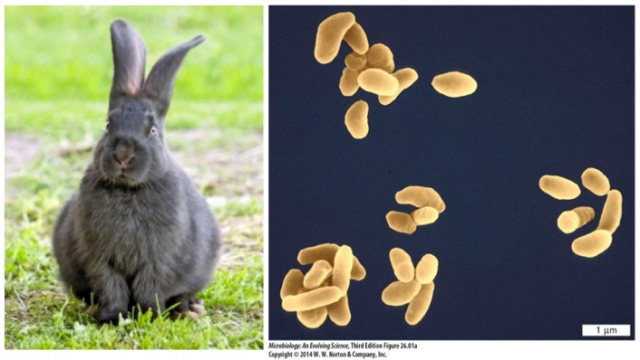
3. From the Easter Bunny to Peter Rabbit, rabbits have had their place in our childhood stories. But beware the nightmare: those cute bunnies may carry a bacterium called Francisella tularensis.

Rabbit and Francisella bacterium, 8 Cuddly Creatures and the Dark, Deadly Diseases They Carry
Depending on where the bacterium first contacts its host, Francisella can cause a variety of symptoms in a disease called tularemia. Symptoms of tularemia include ulcers in the skin, pneumonia, vomiting and more rarely, liver and spleen problems.

4. Slow and steady, those long-living turtles seem to represent all that is patient and wise.

Turtles and Salmonella, 8 Cuddly Creatures and the Dark, Deadly Diseases They Carry
They also carry Salmonella, a bacterium that when ingested can cause a potential life-threatening disease whose symptoms include vomiting, diarrhea, and headaches. RecentSalmonella outbreaks have been attributed to contaminated produce (and to pet bearded dragons in 2014), and the CDC estimates that nearly 1.2 million individuals become infected each year, leading to approximately 450 deaths.

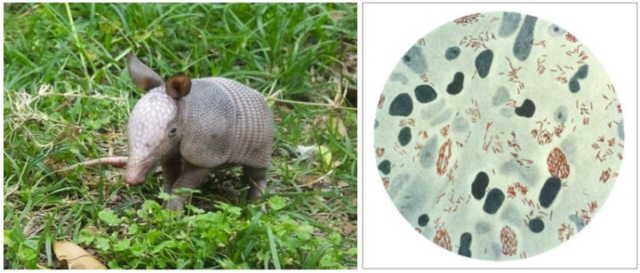
5. These cute armored creatures can swim, run, climb, and roll into balls.

Armadillo and Mycobacterium leprae, 8 Cuddly Creatures and the Dark, Deadly Diseases They Carry
The nine-banded armadillo is a reservoir for the bacterium Mycobacterium lepraeMycobacterium leprae causes leprosy, a devastating disease that causes nerve damage and horrific skin lesions.

6. The child’s favorite pet, hamsters are mostly harmless, except when they carry the LCM virus.

Hamsters and the LCM virus (Lymphocytic choriomeningitis, 8 Cuddly Creatures and the Dark, Deadly Diseases They Carry LCM, or lymphocytic choriomeningitus, causes inflammation of the wrappings of the brain and spinal cord. This virus can be acquired by individuals who come in to contact with fresh urine, droppings or dirty bedding from infected rodents, so avoid touching your eyes, nose and mouth while handling your furry friend or cleaning their cage.

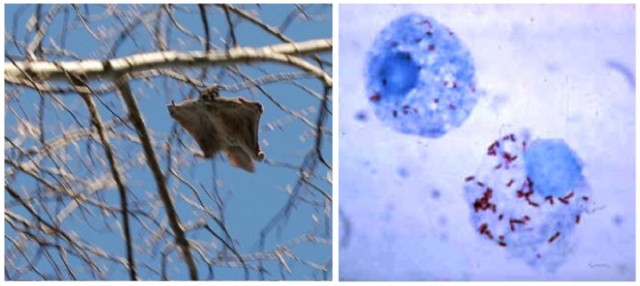
7. Is that a bird? Is that a plane? No, it’s a flying squirrel!

Flying squirrel and Rickettsia prowazekii, Flying squirrel and Rickettsia prowazekii
And its cargo just might be Rickettsia prowazekii, a bacterium that causes the infamous typhus fever. Infection initially presents with a rash followed by muscle pain and fever which usually last 7-10 days.

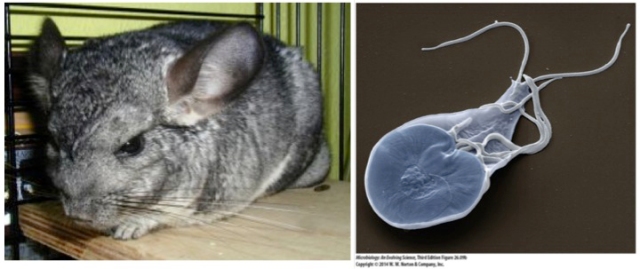
8. It’s fun to say ‘chinchillas’ and it’s fun to play with a chinchilla.

Chinchilla and Giardia, Chinchilla and Giardia
But it’s not fun to get Giardia from these little furballs! Giardia is a parasite with a whiplike tail or “flagella” that is commonly found in bodies of water. Interestingly, a study done in Belgium in 2010 found that 66% of pet Chinchillas tested were infected with Giardia. Infection with Giardia, the most frequently diagnosed intestinal parasitic disease in the US, causes an uncomfortable diarrheal disease that can last for multiple weeks and cause severe dehydration.

Take-Home

Your cuddly furry friends can still be your best friends. Just be observant of strange behaviors and signs, get your pets vaccinated if possible, wash your hands after playing with them, and if Junior dares his brother to lick the pet turtle, tell him that is a very bad idea.
Contributed by: Dr. William Sullivan Jr.’s Laboratory, Department of Pharmacology & Toxicology, Microbiology & Immunology at IUSM: Sherri Huang, Imaan Benmerzouga, Joe Varberg, Michael Harris, Leah Padgett, Victoria Jeffers, William Sullivan Jr.

Thursday, May 28, 2015

From Herb Garden To Medicine Cabinet: Developing A New Drug for Malaria

We live on a lush planet filled with over 290,000 species of plants. Herbs are a particular type of plant that lack a wooden stem, and humans have often sampled them with hopes of finding a new food or flavoring. Sometimes ingestion of an herb produces unwanted effects, such as death. But other herbs have medicinal qualities, such as the alleviation of fever.


Dichroa febrifuga, a medicinal herb that has been historically used to treat fever, is named for its active ingredient, febrifugine.
Dichroa febrifuga is one of the most important herbs in traditional Chinese medicine, used for millennia to treat ailments such as malaria. Malaria is caused by a unicellular parasite called Plasmodium that is transmitted by mosquitoes, and a high fever is one of the trademark symptoms.
 

Malaria has a complex life cycle. After the parasites (sporozoites) are injected via mosquitoes, they travel to the liver (merozoites) and then infect red blood cells. In blood cells, they gobble up the hemoglobin as a nutrient source for replication and development into sexual stages (gametocytes) that can be taken up by another mosquito, thereby spreading the parasite to a new victim.
Malaria continues to be a devastating disease, killing up to 1 million people each year, most of whom are children under the age of five in sub-Saharan Africa. There is an urgent need for new treatments since the parasite has developed resistance to most of our anti-malaria drugs.

While effective against malaria, febrifugine is not tolerated well. What is needed is a better understanding of how febrifugine works:  how does it kill the malaria parasite? If the natural product’s mechanism of action against malaria could be identified, it would pave the way for the development of refined derivatives that are more specific against the parasite and less detrimental to patients. Alas, this is not an easy task. Over 2000 years in the making, scientists have now identified an enzyme in the parasite that is inhibited by febrifugine. That enzyme is called prolyl-tRNA synthetase.

Prolyl-tRNA synthetase is critical for the production of proteins in a cell, a process known as translation. As shown in the figure below, messenger RNA (mRNA), which serves as the “middle man” conveying the information in genes to build proteins, is read by molecular machines called ribosomes. Another type of RNA molecule called transfer RNA (tRNA) recognizes specific nucleotide sequences in the mRNA, bringing the corresponding amino acid to the ribosome so it can be added to a growing protein sequence.

The production of proteins in the cell. Proteins are composed of amino acids (the colored balls) that are connected together in a specific order, as directed by the gene coding for it. The chain of amino acids then typically folds into a three-dimensional shape so that the protein can do its job in the cell.
Aminoacyl-tRNA synthetase enzymes are needed to “charge” the tRNA; in other words, they attach the correct amino acid to the correct tRNA. When prolyl-tRNA synthetase is blocked by febrifugine, the amino acid proline does not get attached to tRNA. This leads to a buildup of “uncharged” tRNA, which is interpreted as a sign of starvation by the cell (or by the single-celled malaria parasite in this case). Proline is a common amino acid needed to build many proteins, and when prolyl-tRNA synthetase isn’t able to do its job, protein production grinds to a halt.

Even better, this enzyme is required in multiple stages of the parasite’s life cycle, knocking out both the liver and the blood forms. But as mentioned above, humans do not tolerate febrifugine very well, probably because we also have a version of prolyl-tRNA synthetase and perhaps other proteins that febrifugine poisons. Having identified this drug target is helping researchers develop derivatives of febrifugine, such as halofuginol, that act more strongly against the parasite’s prolyl-tRNA synthetase with less toxicity in humans.


Halofuginol is chemically similar to febrifugine (see above), having potent activity against malaria but less adverse effects on the host.
So how did scientists figure out that febrifugine targets prolyl-tRNA synthetase? There are several ways to identify the molecular mechanism of drug activity. In this case, the group cultured malaria in the presence of drug, forcing the parasites to evolve or die. Those that lived were less sensitive to febrifugine, meaning that they accrued a genetic change (one or more mutations in their DNA) that allowed them to persist despite the presence of the drug. This process is very analogous to the development of penicillin-resistant bacteria.

Parasites that were able to grow better in febrifugine had their genomes sequenced. Such a feat would have taken years and millions of dollars not long ago, but today it has become routine. The genome sequence of the febrifugine-resistant parasites contained a common mutation in the gene encoding prolyl-tRNA synthetase, which signaled that this enzyme plays a critical role in the drug’s action. Understanding how the parasite develops resistance also helps scientists design compounds that act on the target differently. As you may surmise, we are in a constant “arms race” with these insidious microbes, but this discovery is a step towards a victory for us.
 

Two independent parasite lines that were resistant to febrifugine, HFGR I and II, contained mutations in their prolyl-tRNA synthetase gene. In drug-sensitive parasites (Dd2), an amino acid called leucine (leu) is present at position 1444, but in the mutant parasites, a DNA change led to a different amino acid that conferred resistance to the drug.
 
Contributed by:  Bill Sullivan
Follow Bill on Twitter.

Herman JD, Pepper LR, Cortese JF, Estiu G, Galinsky K, Zuzarte-Luis V, Derbyshire ER, Ribacke U, Lukens AK, Santos SA, Patel V, Clish CB, Sullivan WJ Jr, Zhou H, Bopp SE, Schimmel P, Lindquist S, Clardy J, Mota MM, Keller TL, Whitman M, Wiest O, Wirth DF, & Mazitschek R (2015). The cytoplasmic prolyl-tRNA synthetase of the malaria parasite is a dual-stage target of febrifugine and its analogs. Science translational medicine, 7 (288) PMID: 25995223

Thursday, May 14, 2015

Darwin Can Dance! The Evolution Of Pop Music

Why do most people over 40 hate today’s music? Why do your grandparents keep playing their “Malt Shop Memories” CDs? Why does your mom start dancing when she hears Wham! and your dad start nodding his head wildly when he hears Motley Crue? Why does your Uncle never shut up about how Nirvana was the greatest band ever because they "changed everything"? 

As evidenced by their song, "Do The Evolution", Pearl Jam appears to be well-versed in evolutionary theory. But was the advent of grunge the most radical change in the course of modern music history?
Despite the cliché, the song does not remain the same. Just like biological organisms, music evolves - and where there is evolution, there is science. The modern rock band, As I Lay Dying, sings it best: “The Only Constant Is Change”. 

As I Lay Dying is not the kind of music your parents are going to understand. You can hear them now as they cover their ears, “Turn off that racket! My ears are bleeding! You call that singing? He’s just screaming! Back in my day…” and so on.

Elvis Presley is commonly known as “The King of Rock and Roll” for popularizing a groundbreaking style of music in the 1950s that fused rockabilly, country, and rhythm & blues. To this day, he remains the best selling musical artist of all time, having sold in excess of 600 million records.

With this extraordinary popularity, you’d think that his type of music would still be going strong, but one look at today’s pop music chart and you’ll quickly see that there is little on there that resembles the music Elvis brought to the world. On the contrary, there are styles of music on the charts now that Elvis never could have imagined. At the time this article was written, the #1 song on the Top 100 Billboard chart is “See You Again”, which sounds nothing like the music that was popular prior to the 1990s.

While the reason remains debatable, there’s no question that music changes over time. However, our favorite music tends to be what was popular during the most impressionable years of our youth, between ages 12 and 22. Music heard during that window in our lives appears to get hardwired into our brain, forever serving as a powerful stimulus for dopamine release, a neurotransmitter that makes us feel pleasantly satisfied (perhaps "comfortably numb").

In a new study published in Royal Society Open Science, evolutionary biologists and computer scientists “come together” to advance our understanding of pop music’s evolution. The researchers analyzed 17,000 songs from the US Billboard Hot 100 charts from 1960 to 2010 in order to identify the greatest musical revolution in recent US music history. Was it the famous “British Invasion” led by the Beatles and the Rolling Stones in the 1960s?
Was it the rise of disco in the 1970s, led by the Bee Gees, Village People, and KC & the Sunshine Band, or maybe the earth-shattering hard rock of Led Zeppelin?


Could it be the rise of synth-pop and electronic music by the likes of Madonna, Duran Duran, or Howard Jones in the 1980s?

How about the meteoric rise of those late 80s hairbands like Bon Jovi, Poison, or Warrant?
Or maybe it was the gritty angst of grunge that blasted onto the scene with Nirvana, Alice in Chains, Pearl Jam, and Soundgarden?
None of the above is correct, at least according to the criteria used by the authors of the study, which employed “cutting edge methods from signal processing and text-mining to analyze the musical properties of songs. Their system automatically grouped the thousands of songs by patterns of chord changes and tone allowing researchers to statistically identify trends with an unprecedented degree of consistency.”

The biggest upheaval occurred in 1991, but not with grunge…it was with hip-hop. Starting in the mid-80s, rap and hip-hop began climbing a steady ladder to the mainstream, with the help of artists like Run-DMC, Beastie Boys, Salt-N-Pepa, and LL Cool J. But 1991 was a watershed year with huge breakthroughs for hip-hop artists like N.W.A., Ice Cube, Ice-T, 2Pac, TLC, and Public Enemy. The radical changes in lyrical content and delivery, arrangement, and the diversity of sounds culminated to make hip-hop one of the most innovative changes to music in recent history.


With these powerful tools to analyze how music has evolved over the past 50 years, one has to wonder if it is possible to predict how music might sound in 2065.

Contributed by:  Bill Sullivan

References: 


Matthias Mauch, Robert M. Maccallum, Mark Levy, Armand M. Leroi. The evolution of popular music: USA 1960–2010. Royal Society Open Science, May 2015 DOI: 10.1098/rsos.150081
Salimpoor, V., Benovoy, M., Larcher, K., Dagher, A., & Zatorre, R. (2011). Anatomically distinct dopamine release during anticipation and experience of peak emotion to music Nature Neuroscience, 14 (2), 257-262 DOI: 10.1038/nn.2726

Thursday, April 30, 2015

The Avengers: Is It Possible Someone Could Turn Into A Hulk?

"The Avengers: Age of Ultron" has finally arrived, reuniting fans with their favorite superheroes and introducing them to new ones to cheer on, like Quicksilver.  


Judging from the never-ending string of successful superhero films, it seems safe to say that we're obsessed with champions of justice who harbor extraordinary abilities. No doubt we've shared this fascination with superpowers since the beginning. Some of us are born faster, stronger, smarter - causing the rest of us to wonder whether we can tap into some hidden superpower within ourselves. We love hearing stories of genius and watching talent shows, just to catch a glimpse of someone crossing the threshold of what we thought was the boundary of human capability.

Stanford biologist Sebastian Alvarado is no exception, but he is endeavoring to put some scientific plausibility behind some of our favorite superheroes. Take the Hulk, for instance. The Hulk is the muscular green beast that scrawny scientist Bruce Banner transforms into whenever he gets enraged.

A lot of scientists can identify with Dr. Banner’s plight, and I have seen many undergo an analogous transformation while reading their grant reviews.
 
How did Dr. Banner gain this blessing and curse? As a scientist, he was researching how people summoned these unusual bursts of strength. Using himself as a guinea pig, he exposed himself to gamma radiation in an attempt to become stronger. There was no noticeable effect at first, but when Dr. Banner got angry, his skin turned green and his muscles burst out of his shirt. Since Dr. Banner is a good guy, the Hulk is generally a good beast, although somewhat messy. When the anger subsides, Dr. Banner returns to his modest, wimpy self and heads to the store to buy new clothes.

The comic book tale prompted Dr. Alvarado to wonder:  is this even remotely possible? He addresses the question in the video below.


Let’s clarify a few of these points for those who might be less familiar with the concepts. First, gamma radiation blasts your DNA (chromosomes) apart. As Dr. Alvarado mentioned, there are enzymes that will “heal” the DNA, but it doesn’t always heal correctly, which might result in new genes (and the loss of other genes). Second, we are learning more and more that genes are regulated in a surprising number of ways. They are not merely binary switches that turn on and off, but rather they are controlled more like volume knobs. Epigenetics refers to the factors in your cells that have their fingers on those volume knobs.

We discussed epigenetics in a previous article covering Ozzy Osbourne’s genome; in the case of the Hulk, epigenetics provides an attractive means to account for how Dr. Banner can switch between Hulk and normal guy. Between transformations, Dr. Banner’s genes are not changing, but which ones are active – and the degree they are active – is changing. For example, epigenetic factors can crank up genes controlling muscle development when they receive a signal in the form of a stress hormone that increases during temper tantrums. As this hormone subsides, other epigenetic factors return the volume of those genes to their normal level. You can think of genes as the selection of music, but epigenetic factors are the DJs.
 
So what kinds of epigenetic factors are there? We are discovering a dizzying array of cellular components that can alter gene expression, which can result in changes in physical appearance, behavior, mental abilities, and more. It has long been known that chemical modification (i.e. methylation, delivered by enzymes called DNMTs – DNA methyltransferases) of DNA itself can shut down genes. DNA methylation marks are like orange construction cones blocking the highway. Scientists then discovered that histone proteins, which congregate in bundles of 8 to form nucleosomes, could also be chemically modified in several different ways. The nucleosomes give DNA the “beads on a string" appearance shown below.

This is your DNA, not a pearl necklace! The DNA "string" wraps around the "beads", which are nucleosomes composed of 8 histone proteins. Once thought to merely help package DNA, we now know these nucleosomes are major contributors to the regulation of genes on the DNA.

These proteins were long thought to be just scaffolding components for the DNA, but now we know they play a major role in directing the activity level of nearby genes. Numerous chemical modifications, such as acetylation, methylation, phosphorylation (and more), can take place on multiple places of each histone protein. These may alter the binding between nucleosomes and DNA, making certain genes more accessible, or these modifications may form a cellular “code” that can affect gene expression levels.

Histones can also be moved, replaced, or evicted by epigenetic factors called SWI/SNF ATPases. As the name implies, these enzymes require energy from ATP to affect gene expression. More recently, it has also been found that small non-coding RNA molecules can regulate genes.

A summary of the major epigenetic factors that can regulate the "volume" of gene expression.

While these complex methods a cell employs to influence gene expression offer a potential explanation for how someone could temporarily become a Hulk, it is by no means probable. Most massive gamma radiation doses would destroy genes that are essential to survival. But it is fun to use cutting-edge science to put just a tiny hint of credence behind the superpowers. And even more fun to think that with enough knowledge we may be able to modulate epigenetic factors to treat disease or maximize human potential.

Contributed by:  Bill Sullivan
Follow Bill on Twitter.

Falkenberg KJ, & Johnstone RW (2014). Histone deacetylases and their inhibitors in cancer, neurological diseases and immune disorders. Nature reviews. Drug discovery PMID: 25131830

Haggarty P, Hoad G, Harris SE, Starr JM, Fox HC, Deary IJ, & Whalley LJ (2010). Human intelligence and polymorphisms in the DNA methyltransferase genes involved in epigenetic marking. PloS one, 5 (6) PMID: 20593030